
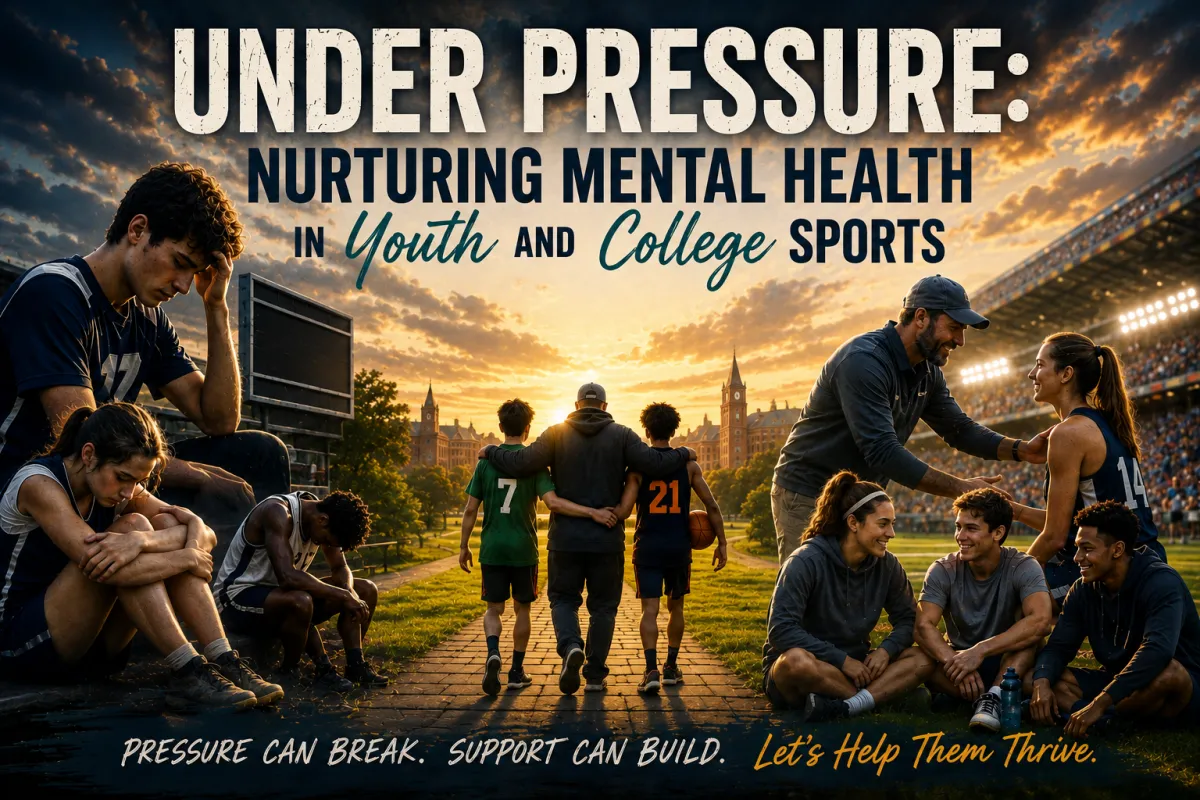
Under Pressure: Supporting Mental Health in Youth and College Athletes
Under Pressure: Nurturing Mental Health in Youth and College Sports
Sports can be a powerful force in a young person’s life. They teach teamwork, build confidence, and push limits. But along with the cheers and victories come pressures that can weigh heavy—pressures that affect not just how kids play, but how they feel about themselves and their future. Understanding these mental and emotional challenges—and knowing how to support athletes at each stage—can make all the difference between burnout and breakthroughs.
The Role of Parents and Coaches: Growing with the Athlete
Parents and coaches are the loudest voices in an athlete’s world. But what kids need from these important adults changes as they grow.
In childhood (roughly ages 6 to 12), the focus should be on fun, exploration, and encouragement. Kids’ brains are wired to learn through play and positive feedback. When adults cheer effort over outcome, kids build confidence and develop a love for the game. Competition at this age works best when it’s friendly and framed as a way to learn how to win and lose with grace.
As kids hit adolescence (ages 12 to 15), things get more complex. Teen brains and bodies are changing fast. They crave independence and start defining who they are—not just by what adults think, but by how they stack up against peers. Coaches and parents who shift from “directors” to “guides,” encouraging teens to set their own goals and reflect on their progress, help them develop resilience and a strong sense of self. Competition here can be a powerful tool for growth, but it must stay focused on personal improvement rather than rankings or adult approval, which can trigger anxiety and undermine self-esteem.
By late adolescence and college age (16 to 22), athletes are capable of deeper self-reflection and more sophisticated goal-setting. They’re motivated by mastery and meaning. At this stage, coaches and parents become mentors who help athletes connect their efforts to long-term aspirations. The stakes—scholarships, careers, identity—are higher, and so are the pressures. Healthy competition drives excellence and self-mastery, but if self-worth becomes tied only to results, mental health can suffer. Supportive relationships and open conversations about stress are crucial.
Competition: A Double-Edged Sword
Competition is a natural part of sports, but how it’s framed makes all the difference. For young kids, keeping competition low-stakes and fun helps build social skills, teamwork, and resilience. Removing competition entirely isn’t the answer—kids need opportunities to experience winning, losing, and trying again in a safe, supportive environment. Handing out trophies to everyone, though well-intentioned, can dilute the meaning of progress and achievement. The goal is to strike a balance that encourages growth without turning every contest into a high-pressure event.
In teens, competition shapes identity and teaches valuable lessons, but too much pressure tied to rankings or adult expectations can lead to anxiety and fear of failure. College athletes face even higher stakes, where competition fuels growth but can also amplify stress if not balanced with intrinsic motivation and self-care.
The healthiest sports environments are those where competition is seen as a personal challenge—a way to learn and grow—not a harsh judgment of worth.
Anxiety and Burnout: Recognizing the Signs
Anxiety in young athletes isn’t just nerves before a game. For some, it’s a constant, invisible struggle—racing hearts, sleepless nights, or replaying mistakes endlessly. Chronic anxiety can drain joy, sap motivation, and push kids to quit.
Sometimes anxiety hides behind arrogance or cockiness—a defensive mask protecting fragile self-esteem. This can lead to unsportsmanlike behavior or bullying, which harms team culture and isolates the athlete.
Burnout is another serious risk. It’s more than tiredness—burnout feels like emotional exhaustion, cynicism, and loss of connection to the sport. Warning signs include withdrawal, irritability, and declining performance. Burnout often feeds off anxiety and relentless pressure.
Preventing burnout means balancing training with rest, encouraging multi-sport play to avoid overuse, and fostering open conversations about stress and pain. But reality isn’t always so simple—competitive environments sometimes push kids to specialize early and play through pain, challenging these best practices.
Building Resilience: Training the Mind
Resilience isn’t something you’re born with—it’s a skill to be built. Mental skills training like visualization, breathing exercises, positive self-talk, and goal setting equip athletes to manage pressure and bounce back from setbacks. Mindfulness practices help athletes observe anxious thoughts without getting overwhelmed.
Developing resilience is a deliberate and demanding process, much like the training undergone by the U.S. Special Forces. They don’t just select the strongest individuals; they rigorously cultivate mental toughness to thrive under extreme pressure. Similarly, athletes at every level can learn and strengthen their mental resilience through intentional practice and support.
When anxiety feels overwhelming, therapy—especially cognitive behavioral therapy (CBT)—can reframe negative thought patterns and build coping skills, providing athletes with tools to face challenges head-on and find their inner will to keep moving forward.
Coach-Athlete Relationships: The Heart of Support
Coaches wield enormous influence beyond tactics and playing time. A coach who fosters open communication, shows genuine care, and prioritizes mental health can be a lifeline. Supported athletes are more likely to seek help, stay motivated, and maintain balance.
But favoritism and exclusion can quietly destroy resilience. When coaches spotlight early “stars” and overlook those still developing, they risk extinguishing motivation in both groups. The unspoken message that only natural talent counts can crush self-belief before it fully forms.
This hurts the team too. When effort goes unrecognized and only a few players are empowered, resentment and fractured trust grow. The strongest teams are those where every player’s contribution matters—and where even the most talented are pushed to keep improving.
Practical Steps for Parents, Coaches, and Athletes
Parents: Be your child’s safe harbor. Celebrate effort and growth. Ask open-ended questions like, “What did you enjoy today?” Allow kids to set their own goals and express feelings honestly. Avoid tying love or approval to wins.
Coaches: Create an environment where mistakes are learning moments, not failures. Teach mental and life skills alongside physical drills. Check in on how athletes feel, and listen to their thoughts, not just focusing how they perform. Recognize effort in all players.
Athletes: You’re more than your sport. Set goals beyond winning—focus on mastery and teamwork. Practice self-care: sleep, nutrition, mindfulness. Don’t hesitate to ask for help if anxiety or burnout strike. Remember, it’s okay to take breaks.
Conclusion: A Shared Journey of Growth
Supporting mental health in sports isn’t a one-time fix—it’s a lifelong commitment for athletes, parents, and coaches alike. When adults tune into developmental shifts, prioritize resilience, and foster supportive relationships, they create environments where pressure becomes a catalyst for growth, not a barrier.
By learning, adapting, and caring for our mental health together, we not only keep kids in the game—we help them thrive in life beyond the field.
Christopher Van Stee, MA, LPC, CAADC